When a leader brings in outside help to make a hire, the hire itself is rarely what they are after. What they want is the outcome it is supposed to produce: a project delivered, a business that grows, a team that finally runs without the owner in every decision. The hire is one lever on that outcome. Treat it as the whole machine and good hires will still fail, because the leader who owns the outcome has to own that distinction too.
I have been matching people into construction roles for years, and the hardest lesson took me a long time to admit. A hire lives inside an ecosystem the leader controls: leadership, compensation, culture, systems and processes, a real career track, and the emotional intelligence to manage conflict and change. Bringing in a strong candidate is a sliver of that. A sliver matters, but it cannot carry the weight of everything around it.
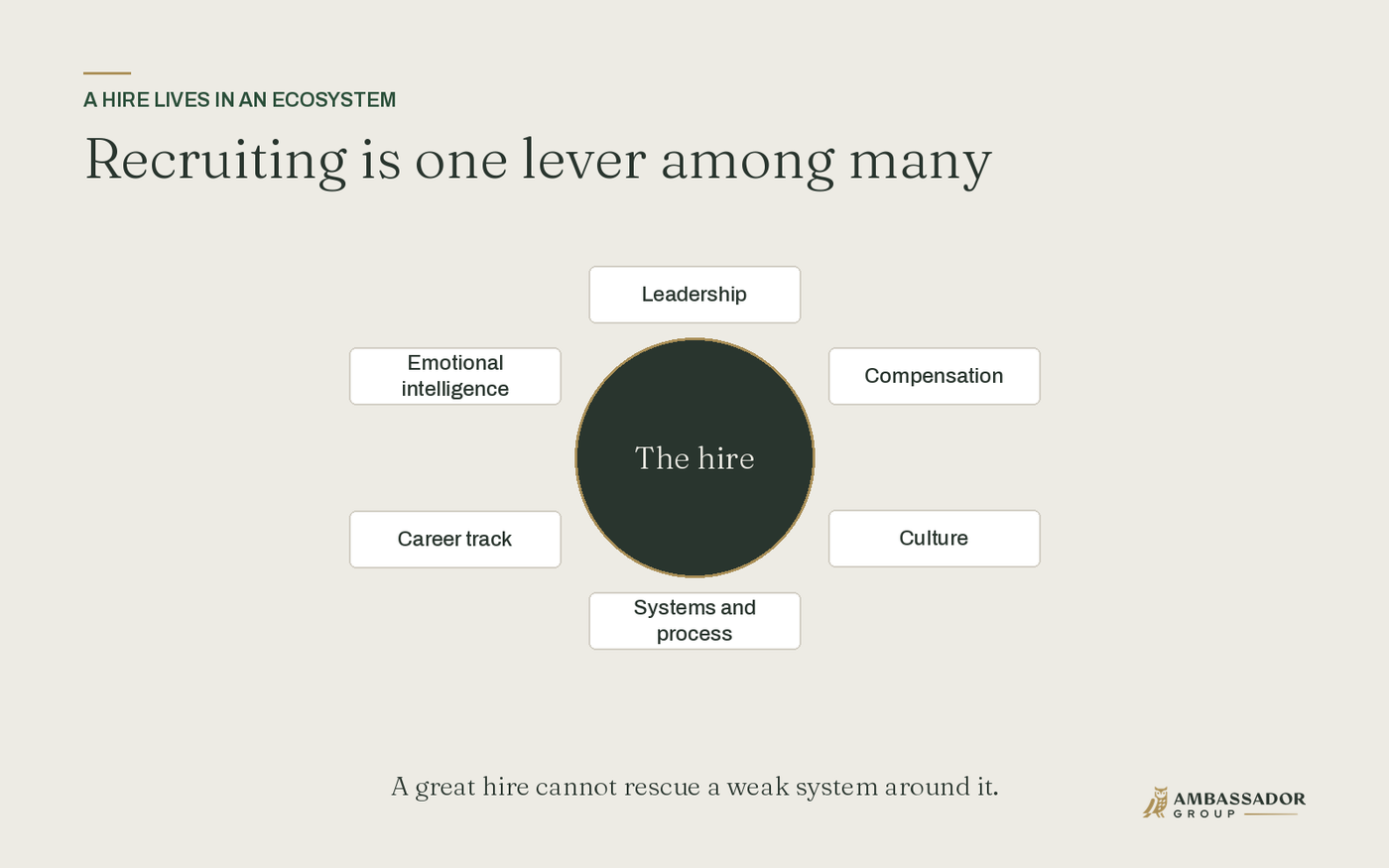
A great hire cannot rescue a weak system
Leaders reach out looking for the person who will unlock the next stage of growth. That hope is fair, and the right match can be a genuine turning point. The trouble starts when the candidate is quietly asked to compensate for everything else that is not working: thin leadership, a vague process, compensation that lags the market, a culture that looks like a family in the interview and like something else by month two. Candidates can sometimes work around a weakness if you name it honestly up front and hire someone built to cover it. They cannot work around a weakness nobody will admit, because they did not sign up to fix a problem they were never told about.
A hire usually fails for a quieter reason than the wrong person: no ecosystem was ready to hold the right one.
The sports version is easy to picture. If you recruit a player at the top of the game, you need an operation ready to play at that level. I watch organizations swing at a hire their leadership and processes are not built to support. An A-player joins a B-level shop, which is a perfectly good shop, except the A-player notices, and A-players do not stay where growth has stalled and standards are loose. The drive that made them want a place at a stronger table is the same drive that makes them leave when the table turns out to be wobbly. You have engineered a mismatch and called it a hiring problem.
This is why the outcome matters more than the hire itself: the project that ships, the division that finally runs without you in every meeting, the growth you have been chasing. The new person is one input into that, alongside how you lead, how you pay, how you develop people, and how clearly your systems let someone succeed. Treat the hire as the single cause of growth and you will keep being disappointed by good people.
Urgency is where diligence gets skipped
The other pattern shows up under the gun. A company grows, takes on more than it can staff, loses someone at the worst moment, and now the search is urgent. Backs against the wall, everyone under time pressure, the interview strategy gets shortchanged and alignment gets assumed instead of checked. That is the recipe for a hasty hire and an expensive unwind. The pain that makes you move fast is the same pain that makes you skip the steps that protect the hire.
It is not my place to tell a leader they may not hire someone. But I have watched leaders take risks that were never worth taking, because the clock felt louder than the consequences. Do the diligence on your people anyway. There is nothing more important you do than gatekeeping who gets into the business, and an ounce of prevention here is worth a pound of cure later. A vacancy held open one more month costs less than the wrong person you spend a year removing.
Servant leadership is the variable that moves everything
Before the next search, take an honest read of the whole system. Your leadership is the largest factor in whether any hire succeeds. The ability to lead with clarity, to handle a range of people, to run change without breaking the team, sets the ceiling on what talent can do for you. You cannot hire a superintendent good enough to survive a poor leader. That leader generates the very problems the new hire was supposed to solve, and a strong candidate will eventually be worn down by it no matter how good the offer looked on paper.
So look past recruiting at the broader picture: your leadership, your compensation, your culture, your systems, the career track you can honestly offer, and your own emotional intelligence under stress. There are good consultants for most of those, and outside help can reach talent and strategy you cannot reach alone. Use it. Then own the part only you can own. Map the full ecosystem of your business, fix what you control, and the hire you make will return far more than it cost. You already know which part of your operation you have been hoping a new face would fix. That is the part to fix first.