In a compensation conversation, the company almost always holds more information than you do. They negotiate offers constantly, they see the books, and they have data on what people in your role are worth. You walk in with a number and a hope. That asymmetry is the real reason so many negotiations feel like a gamble, and closing it is your job, because a durable match depends on both sides committing with open eyes. You cannot represent your worth honestly if you have not done the work to understand it, and a number you cannot justify is a number you will not get.
The first mistake most candidates make is collapsing compensation down to base salary. Salary is one line on a much longer ledger. Your commute is on that ledger, and in a large metro it is not small: thirty miles each way in a truck that gets fourteen miles to the gallon is a real, recurring cost that comes straight out of what the job pays you. Paid time off is on the ledger. So is your bonus structure, your health plan and what you pay to add your family to it, the retirement match, the allowances, and the perks you stopped noticing. Add a relocation and cost-of-living shift on top, and a clean salary comparison between your current role and an offer turns into apples and oranges.
Build the full picture before you talk
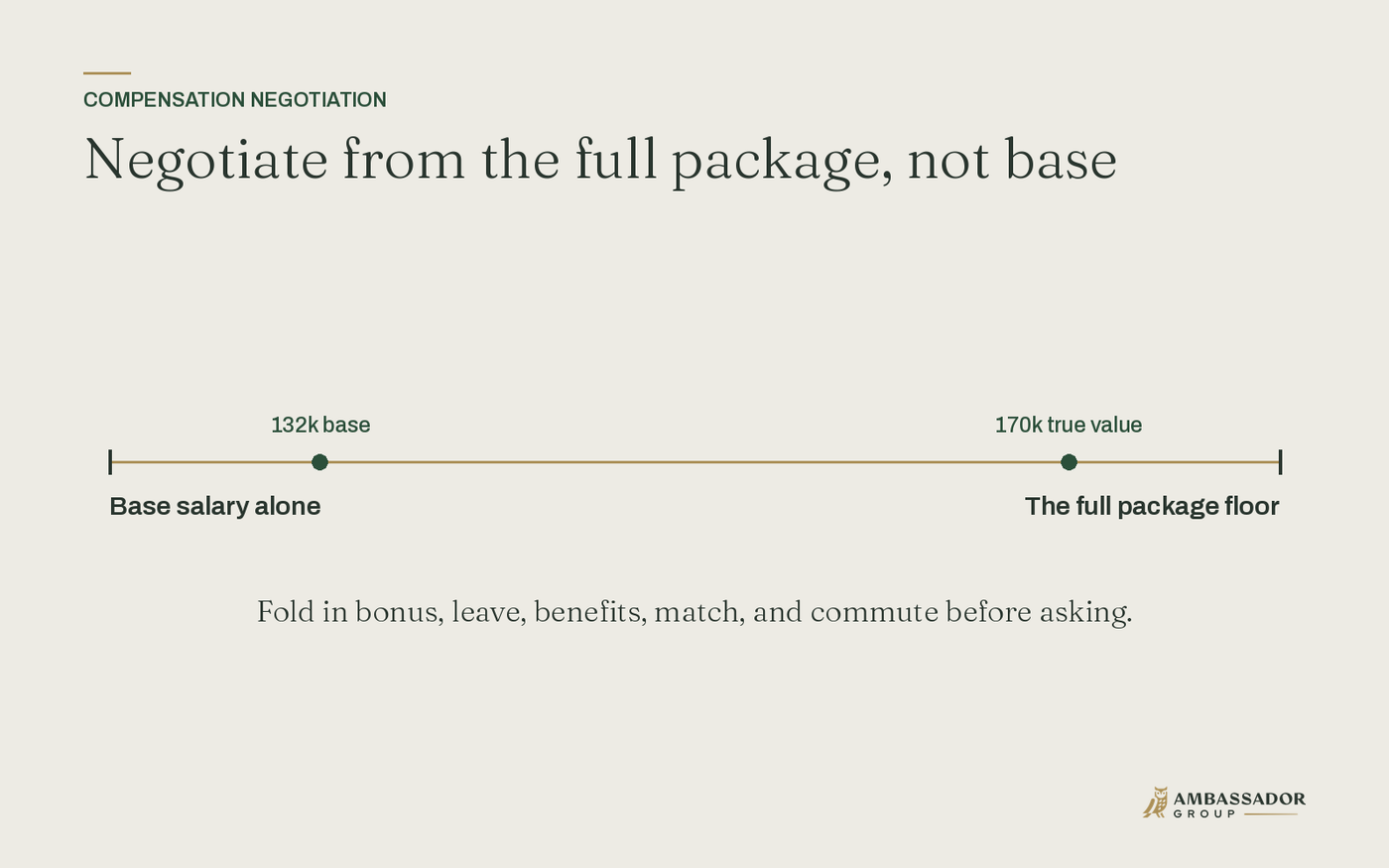
Before you can ask for more, you have to know what you already have. Tally the whole package, not the headline. A role that reads as a hundred and thirty-two thousand in base can land near a hundred and seventy once you fold in the bonus, the leave, the benefits you would otherwise buy yourself, the match, and the commute cost on the other side of the ledger. That full number is the floor you negotiate from. Without it, you are arguing about a salary line while the parts that change your actual life sit unexamined.
To make this concrete, I built a custom compensation negotiation GPT you can use for free. It walks you through every input: base, overtime, commute, leave, bonus, health care, retirement match, perks, and a cost-of-living analysis if you are moving to a new area. It sums the package so you can compare your current compensation against an offer on the same terms, apples to apples, instead of guessing.
The number you can defend is worth more than the number you can wish for, because the company can only say yes to a case you have made.
Negotiate against their goals, not in a vacuum
Once you know your number, the tool turns to strategy, and the strongest advice it gives is the least intuitive. Do not negotiate in a vacuum, asking for more purely because you want more. Frame your request against what the company is trying to accomplish. What does this team need to deliver this year, and how does paying you well help them get there? An ask anchored to their goals is one a hiring leader can champion internally, because you have handed them the justification along with the request. That is what makes someone feel good about paying you what you want to be paid.
The tool helps you find your real value points and write the justification for each one, then think through the full range of levers. Maybe the answer is base. Maybe it is a larger performance bonus structured around outcomes the company already cares about. Maybe it is commute assistance, more paid time off, or a bigger retirement contribution. A company has many ways to improve an offer, and a candidate who only knows how to push on salary leaves the easy wins on the table.
Why this protects you
You may feel that the only way to win a strong offer is to go acquire a competing one and use it as a wedge. A rival offer feels powerful in the moment. But when a leader asks what your request is grounded in, that offer is a thin answer, and it sets a combative tone in a relationship you are hoping will last for years. A case built on your real compensation, your performance, and the company's goals is sturdier than a bluff, and it starts the relationship on honesty instead of brinkmanship.
That honesty is the point. A good company owes you a fair, clear-eyed assessment of what you are worth to them. You owe that company a request you can stand behind and defend, not an inflated swing or a number copied from a forum. When both sides bring real information, the negotiation stops being a contest and becomes the first true test of whether this is a match worth making. Walk into the conversation with the whole ledger in hand and a justification you believe, and you stop hoping for a good outcome and start building one.