Here is the hot take: your resume reflects you, and no one else. It is the first honest representation of your work a hiring leader will hold, and shrinking it to fit someone's format preference works against that. Honesty cuts both ways in a good match, and the resume is where a candidate starts paying their half.
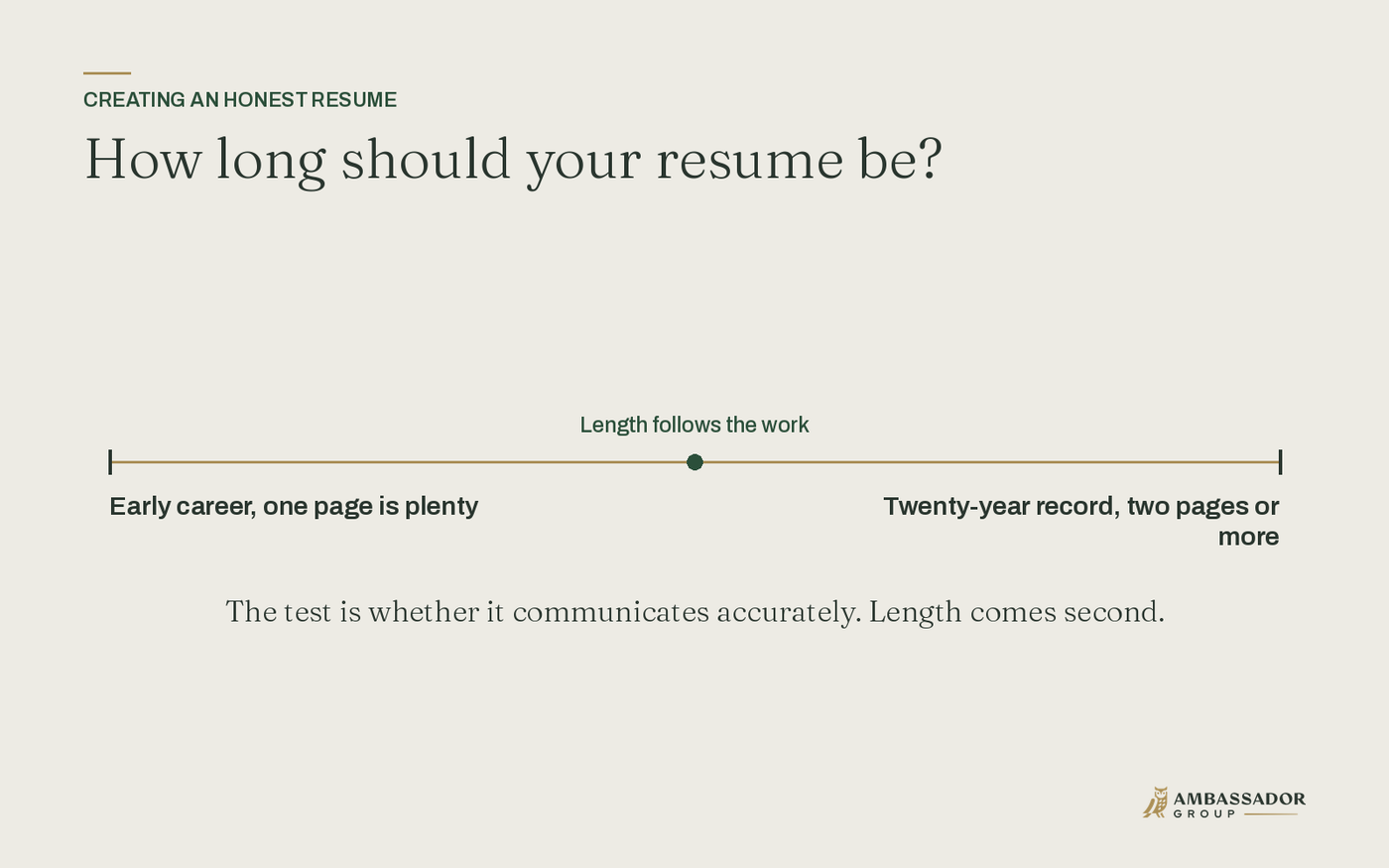
The one-page rule gets treated as law. It is not. The reason behind it is fair enough, since people scan a resume to decide whether they are interested, and a tight document respects their time. A new graduate with one internship has no business stretching to two pages. But fair is not absolute. Not every career fits on one page, and forcing a 20-year chronology in construction into half of one does not read as disciplined. It reads as missing. A superintendent who has run a dozen significant projects cannot, and should not, compress that into six bullet points and a stack of acronyms.
Let the truth set the length
Use the space the truth requires. Articulate your experience and your skills in the order they happened, clearly enough that a stranger can follow the arc of your career without calling you to fill in the gaps. If that takes a page, take a page. If it takes two, take two. The test is whether the document accurately communicates what you have done. Length is a distant second.
For most construction professionals, the project history earns the read more than the bullet list does. A leader scanning your resume wants to know what you built, how big it was, what your role was on it, what the budget and schedule looked like, and whether you were there at the start or parachuted in at the end. A separate, well-organized project list, with real numbers and real scope, often tells a hiring leader more than the job titles ever will. Give them that, and give it to them straight.
Honest does not mean modest
Honesty means describing your work accurately, neither inflated nor shrunk. Do not claim a title you did not hold or take sole credit for a team's result. You will be found out in a reference check or the first hard interview question, and the cost of being caught is far higher than the cost of being plain. But do not bury your contribution out of false humility either. State what you owned, what you delivered, and where you grew. Accuracy runs in both directions.
Then earn the read
Spell everything correctly. Format it so the eye moves easily, with consistent dates, aligned columns, and headings a tired reader can follow at a glance. A resume riddled with typos and broken formatting tells a leader something true about how you will handle a submittal log or a closeout package, fairly or not. The document is standing in for you in a conversation you are not in yet, so make it carry your professionalism the way you would carry yourself into a first meeting.
A clean, accurate, complete resume tells a leader you take your own work seriously, which is the first thing they are trying to learn about you anyway. The same care a good company owes a candidate, a candidate owes the company in return. Your resume is where you start paying it. Write the true one, make it unmistakably yours, and let it do its job.