
If you’ve ever said, “I just don’t have time to focus on hiring right now” you’re not alone.
And if you’ve ever thought, “Even when we put time into it, it’s still a gamble” you’re also not alone.
Both statements feel like facts. In construction, projects run hot, clients are waiting, and teams are stretched thin. And yes, even a candidate who looks perfect can still flop 90 days later.
But here’s the uncomfortable truth: these aren’t facts.
They’re leadership postures, and they’re two of the most expensive postures you can take.
Why “I Don’t Have Time” and “It’s a Gamble” Cost So Much
Hiring is the gateway through which every person enters your company. The skills, attitude, and alignment of those people determine the quality of your projects, your culture, your client relationships, and ultimately, your profit.
When leaders delay or disengage from hiring because it feels like a bad use of their time, several things happen:
- The wrong people get in. Without your involvement, hiring decisions skew toward short-term relief instead of long-term fit.
- Your best people carry the burden. The wrong hire doesn’t just underperform, they drag down your top performers.
- Opportunities slip away. The industry’s best talent rarely sits idle. If you can’t move quickly, someone else will.
As Jim Collins wrote in Good to Great, “People are not your most important asset. The right people are.”
You don’t get the right people by treating hiring as an afterthought.
The Efficiency Myth: “Why Pour Energy Into a Gamble?”
Many hiring authorities quietly think, “Hiring feels like rolling the dice. Why sink hours into something so uncertain?”
That logic seems efficient, focusing on things you can control instead of a coin toss.
The problem is that belief keeps the coin toss alive.
When leaders approach hiring as a gamble, they default to shortcuts: rushing interviews, skipping structured evaluations, and relying on gut feel. Those shortcuts guarantee higher turnover, slower ramps, and constant re-spending of time, money, and emotional energy.
Hiring feels like a gamble because most processes lack:
- Clarity about what success in the role actually looks like.
- Accountability for how candidates are evaluated.
- Consistency in decision-making.
The companies that treat hiring as a discipline, not a bet, steadily reduce uncertainty. The ROI comes in fewer bad hires, faster ramps for good ones, and a compounding talent advantage that pays out for years.
It’s Really Ironic
You will spend the time on the hire either way, either up front in disciplined interviewing, or on the backend shoring up and doing damage control. Pick your hard.
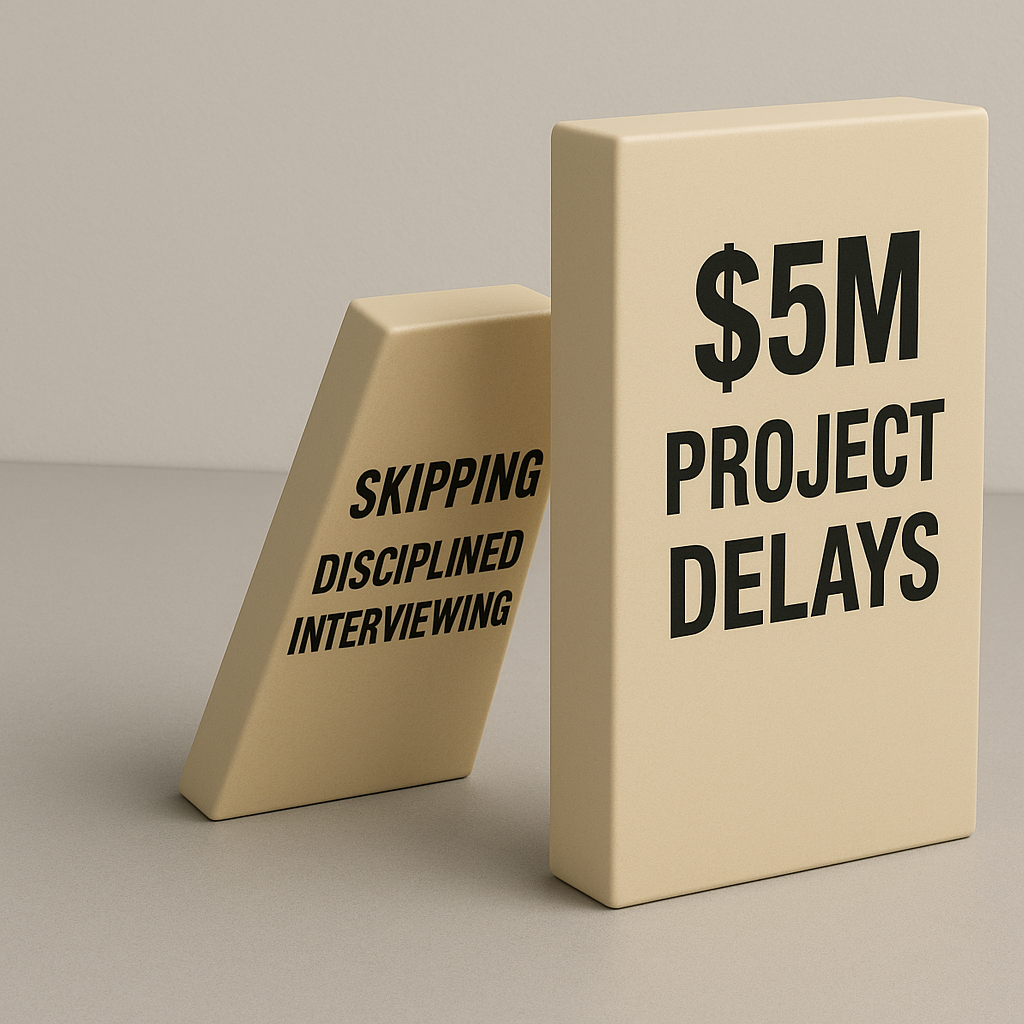
Reframing Your Role in Hiring
Time spent hiring well is not a detour from your main work. It is the main work.
It is one of the few leadership tasks that has a compounding return:
- One great hire can transform a department.
- One bad hire can undo months of progress.
When you treat hiring as a strategic leadership discipline, you’re not just filling seats. You’re designing the future of your company. That demands your attention, your decision-making, and your presence.
How to Move From “No Time” and “It’s a Gamble” to “Right Time” and “Worth the Effort”
- Front-load the process. Spend more time clarifying the role, expectations, and success profile before you post a job or meet a candidate.
- Create a structured interview strategy. Assign clear interviewer roles, prepare relevant questions, and establish a scoring system for feedback.
- Set decision deadlines. Talent moves quickly, your process should too.
- Get expert help. Partner with specialists who can run the recruiting, screening, and candidate engagement, freeing you to focus on evaluating and deciding.
Leadership Without Hiring Discipline Is Just Hope
Hope is not a strategy.
The construction leaders who consistently win, even in talent-scarce markets, are the ones who make hiring a non-negotiable priority. They understand that their company’s future is built not just on concrete and steel, but on the people who manage, lead, and execute every part of the work.
If “I don’t have time” and “it’s a gamble” keep showing up in your hiring process, it’s not your calendar or your odds that need to change. It’s your leadership posture.
Here’s one last meme for fun.
The short version.
- Why is "I don't have time to focus on hiring" such an expensive attitude?
- Because hiring is the gateway every person enters your company through, and disengaging from it lets the wrong people in. Without leadership involvement, decisions skew toward short-term relief instead of long-term fit, bad hires drag down your top performers, and the industry's best talent signs elsewhere while you stall. You pay for the hire either way: up front in disciplined interviewing or on the back end in damage control.
- Why does hiring feel like a gamble, and how do I fix that?
- Hiring feels like a coin toss when the process lacks clarity about what success in the role looks like, accountability for how candidates are evaluated, and consistency in decision-making. Treating it as a gamble drives shortcuts like rushed interviews and gut-feel decisions, which guarantee turnover. Companies that treat hiring as a discipline steadily reduce the uncertainty and build a compounding talent advantage.
- How can a busy construction leader run a better hiring process?
- Front-load the work: clarify the role, expectations, and success profile before posting the job or meeting anyone. Then build a structured interview strategy with assigned interviewer roles and a scoring system, set decision deadlines because talent moves fast, and bring in specialists to run recruiting and screening so you can focus on evaluating and deciding.
- Is time spent on hiring a distraction from running the business?
- No, it is the main work. Hiring is one of the few leadership tasks with a compounding return: one great hire can transform a department, and one bad hire can undo months of progress. Leaders who treat it as a strategic discipline are designing the future of the company, not taking a detour from it.


