
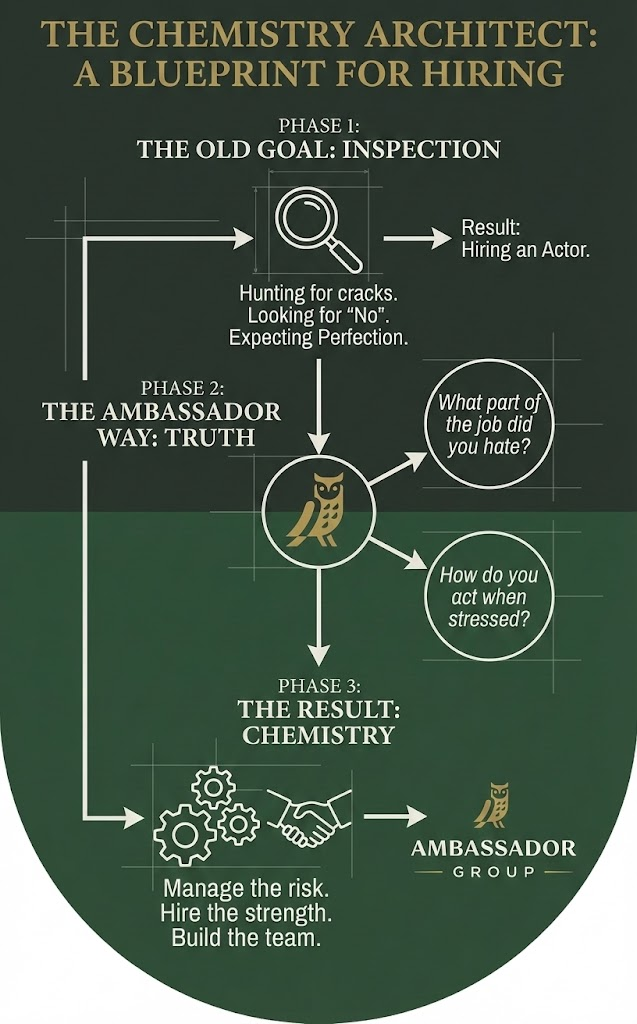
Most leaders go into an interview with the wrong goal. They act like an inspector looking for a crack in the foundation. They want to find a reason to say “no.” They hunt for flaws.
They think the winner is the person with zero weaknesses.
But that is a mistake.
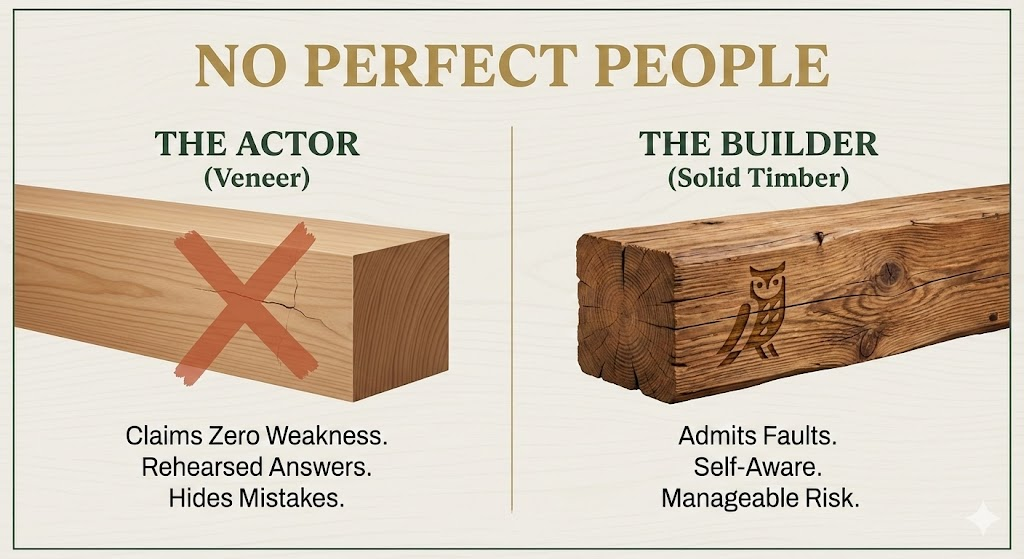
There are no perfect people. There are only real people and people who are pretending. When you look for a candidate with no weakness, you usually end up hiring a good actor. You hire someone who is good at hiding their mistakes. In our line of work, hiding mistakes is dangerous.
The Problem with “Zero Weakness”
If a candidate tells you they have no weak spots, they lack self-awareness. Or they are lying. Neither one is good for your job site.
As professional matchmakers, we take a different approach. We do not look for perfection. We look for the truth.
A Better Way to Interview
You should stop trying to find the person who makes no mistakes. Instead, try to understand the mistakes they will make.
Every strength has a cost.
- The guy who moves fast might miss small details.
- The leader who is very careful might be slow to make decisions.
- The superintendent who is great with clients might be too soft on the crew.
This is normal. The goal of the interview is to put those cards on the table.
Ask Hard Questions
Don’t ask “What is your greatest weakness?” That invites a rehearsed answer.
Ask questions like this:
- “Tell me about a time you missed a deadline. Why did it happen?”
- “What part of your last job did you hate doing?”
- “When you are stressed, how do you act?”
Manage the Risk
Once you know their weakness, you can decide if it matters.
If you need a safety manager, you cannot hire someone who hates conflict. That will not work. But if you need a creative estimator, maybe it is okay if they are not great at public speaking.
Hire the person with the incredible strength you need. Accept the weakness that comes with it. Just make sure you know what it is before they start.
The best teams are not made of perfect people. They are made of honest people who know where they need help.
The short version.
- Should I look for a candidate with no weaknesses?
- No. There are no perfect people, only real people and people who are pretending, so hunting for zero weaknesses usually means hiring a good actor who hides mistakes. A candidate who claims no weak spots either lacks self-awareness or is lying, and neither is good for your job site.
- How do I get candidates to reveal real weaknesses in an interview?
- Skip the rehearsed what-is-your-greatest-weakness question. Instead ask: tell me about a time you missed a deadline and why it happened, what part of your last job did you hate doing, and how do you act when you are stressed. The goal is truth on the table, not a polished performance.
- What should I do once I know a candidate's weakness?
- Decide whether it matters for this specific role. A safety manager who hates conflict will not work, but a creative estimator who is weak at public speaking may be fine. Hire the incredible strength you need, accept the weakness that comes with it, and make sure you know what it is before they start.
- Why does every candidate strength come with a cost?
- Because tradeoffs are built into how people work: the person who moves fast might miss small details, the careful leader might be slow to decide, and the superintendent who is great with clients might be too soft on the crew. That is normal. The best teams are not made of perfect people; they are made of honest people who know where they need help.


