
Ask a construction owner what drives the company and you will hear about safe crews, quality work and developing people. You will rarely hear "my own ambition." In a good year you cannot tell the two apart. The difference shows up when something has to give: a job runs over, a market turns, a crew is stretched thin. Then you learn who absorbs the sacrifice.
Two leaders, one bad quarter
A mission-driven leader works toward something bigger than their own position: crews who go home safe, people who grow, buildings that last. An ambition-driven leader works toward their own position: revenue, title, size, the next win. Both can run a profitable company. Both can be generous when margins are fat.
Put them through the same bad quarter. A big job is behind, the project manager is drowning, and the owner has to choose. The mission-driven leader takes the hit first: slows the next bid, eats the margin, or steps into the work. The ambition-driven leader passes the hit downhill: longer weeks for the field, a corner cut on the schedule, a client told what they want to hear.
That is the whole test. Mission costs the leader first. Ambition costs everyone else first.
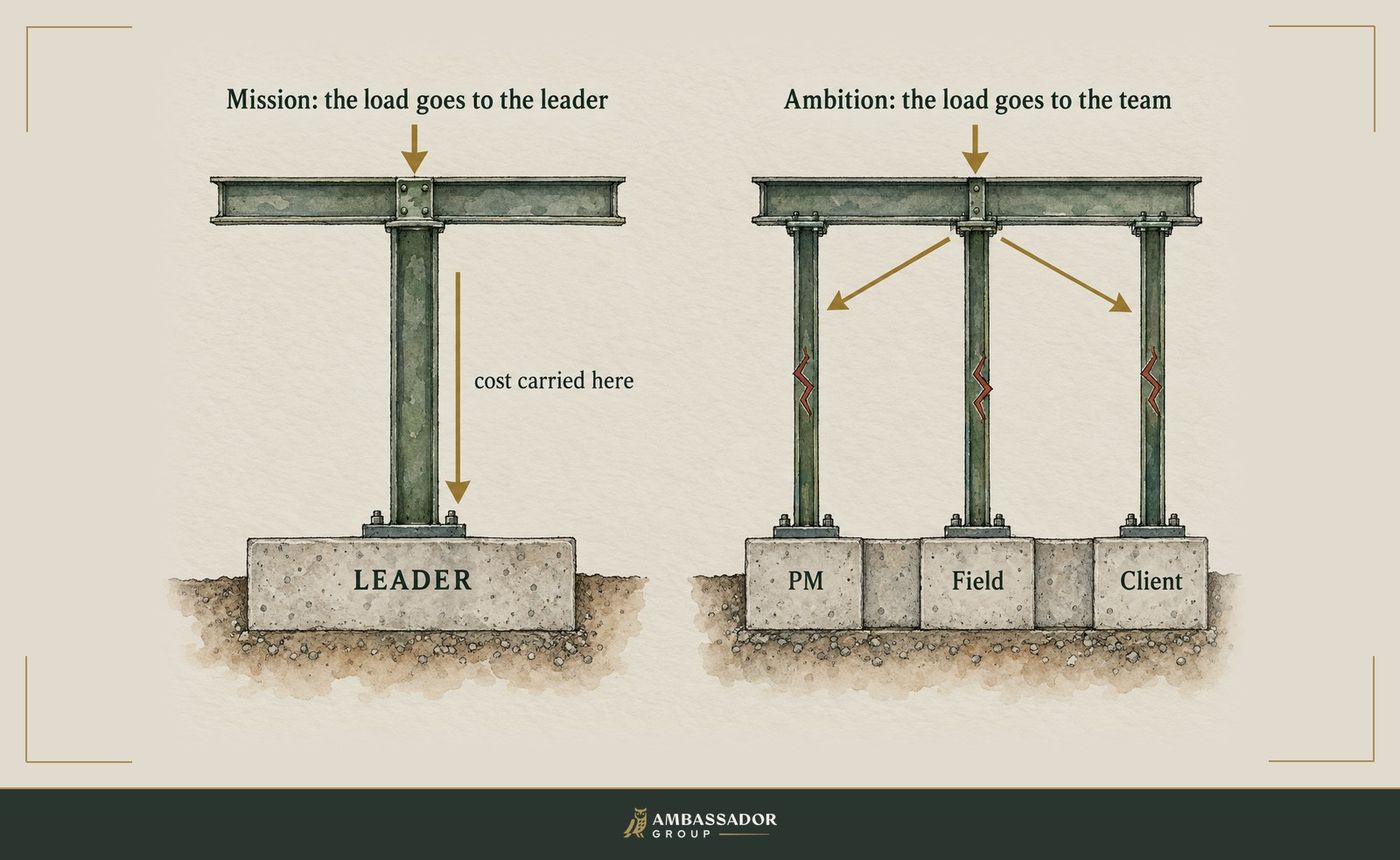
The same split shows up with a project manager who brings in a fifth of the profit and has burned through two foremen. One owner lets the PM go and lives with the smaller year. The other keeps the revenue and schedules a talk about professionalism. The foremen pay, and the culture remembers.
What the ambition serves
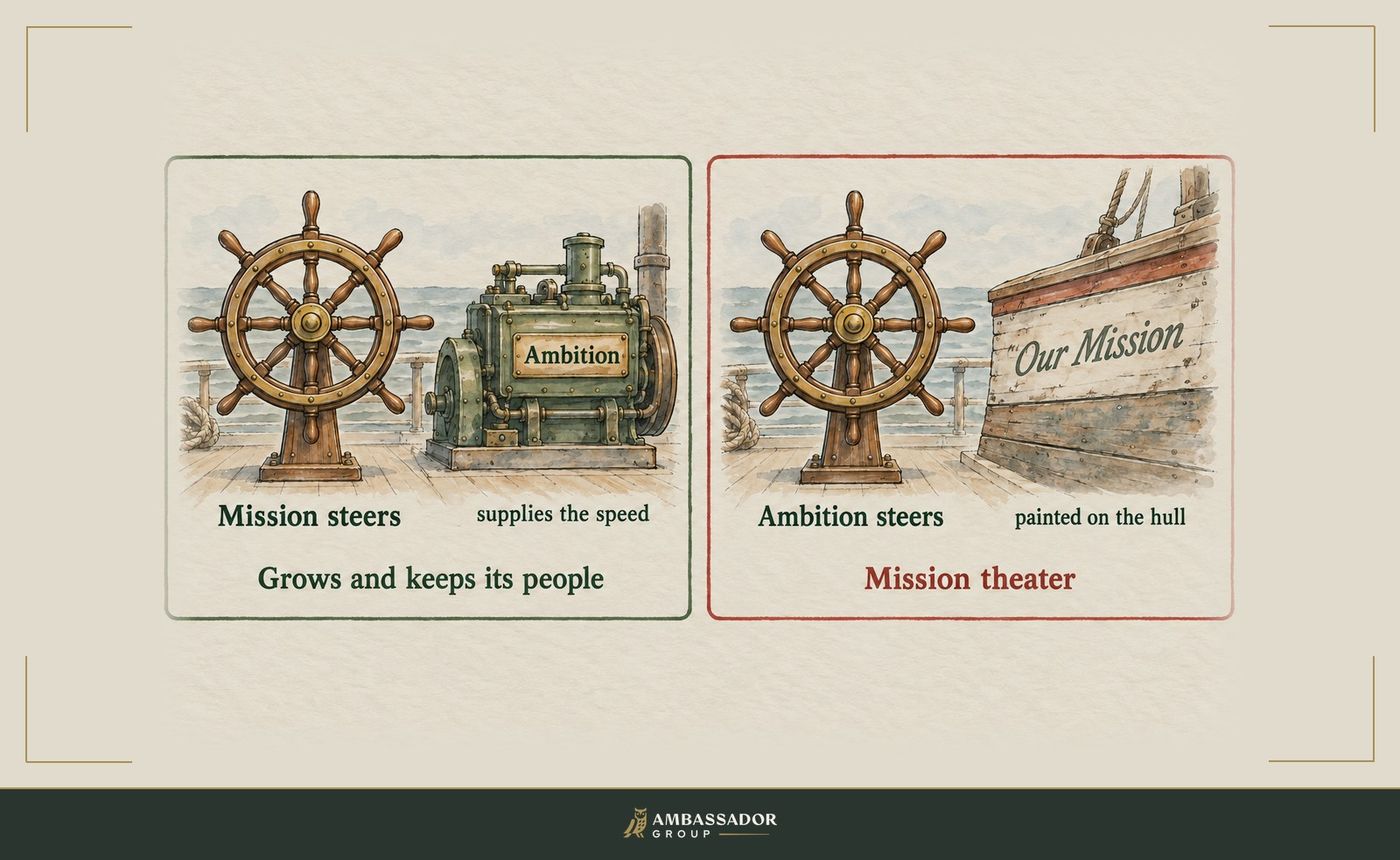
Ambition is fuel. The construction leaders I respect most want to win, and they want it badly. The question is what the ambition serves. When the mission sets the direction and ambition supplies the speed, you get a company that grows and keeps its people. When ambition sets the direction and the mission becomes a line on the website, you get mission theater: values on the wall, and a crew that knows better.
That is also why "too mission-driven" is the wrong diagnosis. A leader who avoids a layoff the business needs, or ignores margin until the company is in trouble, has a mission that is too small. Often they are protecting their image as the one who takes care of people, and the people who stay pay for it. A company that can't pay its people can't develop them. Financial health belongs inside the mission.
Where it shows up first: hiring
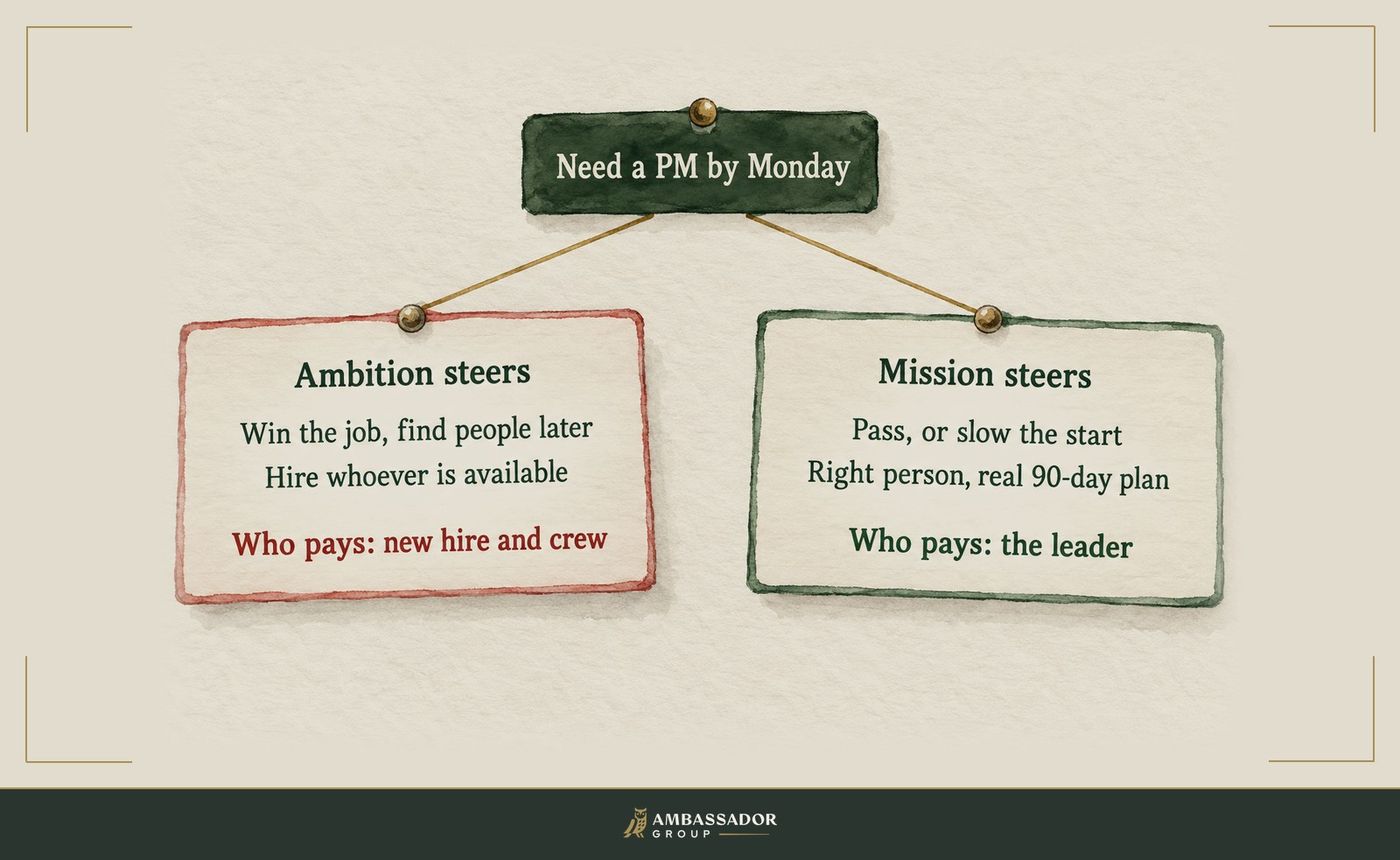
Hiring exposes motivation faster than any values statement. Watch how a leader behaves when they need a project manager by Monday.
The ambition-driven move is to win the job first and find the people later, hire whoever is available, and push the new hire to perform before they understand the work. The new hire absorbs the sacrifice, and so does the crew they now lead.
The mission-driven move is harder. Pass on growth the team can't lead yet, or accept a slower start so the right person comes in with a real plan for their first ninety days. The leader absorbs the sacrifice: lost revenue, and a longer stretch of doing two jobs.
The same test works on a candidate. Ask them about the last time doing the right thing cost them personally: a bonus, a promotion, a client. Listen for who paid. Then ask their references who worked under them when the schedule slipped.
At Ambassador Group we hold our own growth to one rule: don't grow what you can't lead. It has cost us work we could have taken.
Run the test on yourself
Asking "am I mission-driven?" won't tell you much. Almost every leader answers yes. Look at the record instead.
- Name the last three hard calls you made: a job you bid, a person you let go, a deadline you set.
- For each one, write down who paid for it and what the payment protected. Your time, your margin, your comfort? Or your project manager's weekends, your superintendent's crew, your client's schedule?
- Ask the people who paid. Your team already knows the answer.
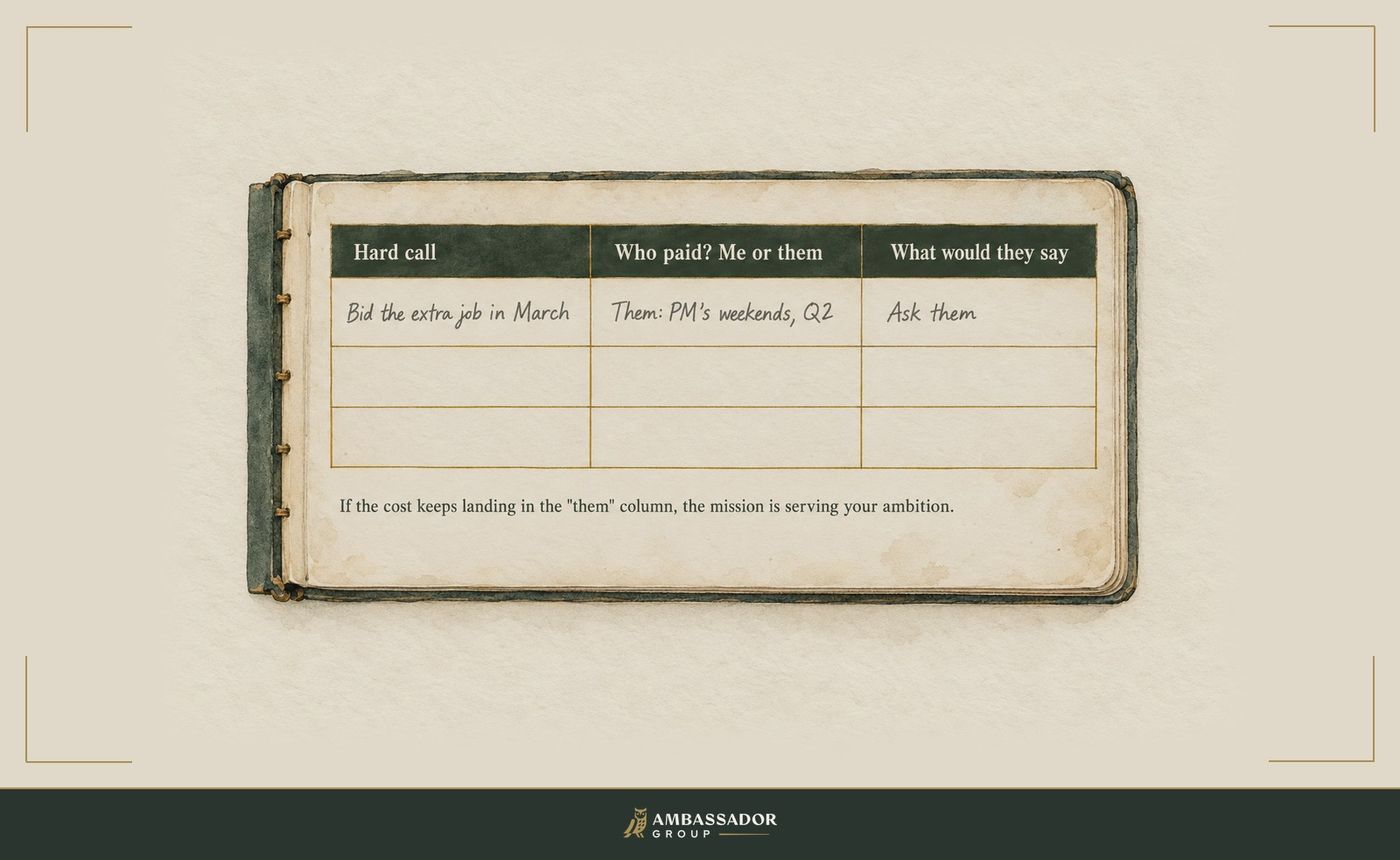
If the cost keeps landing on you, ambition is serving the mission. If it keeps landing on them, the mission is serving your ambition, and your best people will leave before you see it.
Keep the ambition. Change who carries the load.
The short version.
- What is the difference between a mission-driven leader and an ambition-driven leader?
- Who pays when something has to give. A mission-driven leader absorbs the cost first: margin, time, comfort. An ambition-driven leader passes it downhill to the team, the field and the client.
- Is ambition bad for a construction leader?
- No. Ambition is fuel. The risk is ambition setting the direction while the mission becomes a slogan. Let the mission steer and let ambition supply the speed.
- Can a leader be too mission-driven?
- Avoiding a needed layoff or ignoring margin signals a mission that is too small, and often a leader protecting their own image as the caring one. A company that can't pay its people can't develop them, so financial health belongs inside the mission.
- How does this show up in hiring?
- Under pressure, the ambition-driven owner wins the work and hires whoever is available, and the new hire carries the risk. The mission-driven owner passes on growth the team can't lead yet, or slows down to hire the right person, and carries the cost personally.
- How do I tell which one drives me?
- List your last three hard calls and write down who paid for each one. If the cost keeps landing on you, ambition is serving the mission. If it keeps landing on your team, ask them. They already know.


