
A raise conversation is one of the few moments where you sit across the table from the person who decides your compensation and have to advocate for yourself out loud. The anxiety is real. But the thing most people get wrong is treating that conversation as a contest to win rather than a case to make. A raise is not a referendum on the economy or the time of year. It is a question of what your work has been worth and whether you can show it. The negotiators who do this well do not out-pressure their boss. They out-prepare them.
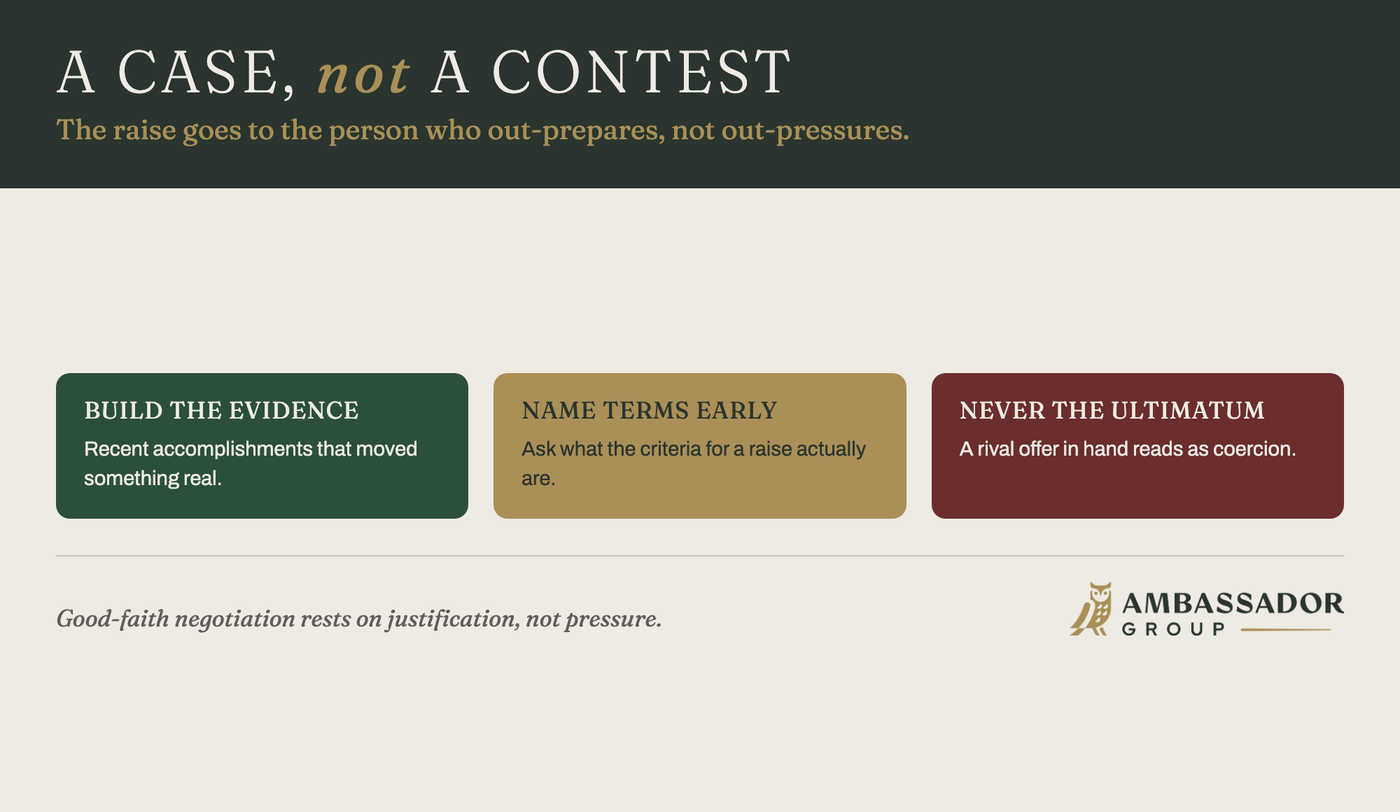
One-on-one time with a manager is rare enough that you should walk in with the whole thing mapped: your argument, your evidence, and a few counterpoints you expect to hear. Good-faith negotiation rests on justification, not pressure.
What to prepare before you walk in
- Justify everything. Before you ever ask for the meeting, write out your accomplishments, the recent ones first. The achievements that moved something for the company carry the most weight. Walk in with the case already built.
- Lead with the perks and benefits that matter to you. If there are specific terms you want on the table, name them early so they stay at the front of the conversation instead of getting tacked on at the end.
- Stay flexible. Compensation is more than a base number. There are many ways to improve your employment terms, and rigidity closes doors that flexibility keeps open.
- Ask how to make more. "Worth" is hard to pin down on your own. Ask your manager directly what their criteria are for raises and greater compensation. That single question often turns a vague campaign into a clear path.
- Time it well. Approach your boss right after you have closed out a large project or just before a review. Follow good news.
- Stay professional. Most negotiations end in mutual compromise, and you will most likely not get the full number you ask for. Trust your manager to work with you to get you everything they can, and hold up your end as a good-faith negotiator.
Learning to negotiate well with your boss compounds. One day you may sit on the other side of the table, negotiating a raise on behalf of someone who reports to you, and the instincts you build now are the ones you will use then.
The mistakes that sink a raise conversation
- Never take things personally or let emotion cloud your judgment.
- Avoid comparing your performance to anyone else's.
- Never issue an ultimatum. Bringing in an offer from another company is an ultimatum. It is coercive negotiating, and your boss will read it that way.
- Do not frame your current position as a problem.
- You are making a case, not putting on a show.
A negotiation is a collaboration, and collaboration requires aligned interests. If you are focused only on your own benefit and not on the company, your manager, or the team, you will meet far more resistance than you expected.
Raise negotiations are a relational art form. You can plan only so much before the flow of the conversation takes over. When it does, stay present and listen to what your boss is actually saying, not to what you plan to say next.
The case for your raise is yours to build, and the only person who can decide it is worth making is you.